Why Menstrual Health and Sustainability Belong in the Same Conversation
- By apentengcollins
- June 9, 2026
Sustainability · Partnerships · June 2026 · 6 min read
True sustainability isn’t just about changing how we shop — it’s about rethinking the products we rely on every single day. And sometimes, the most overlooked contributors to the global waste crisis are hiding in plain sight: in our medicine cabinets, our bathroom shelves, and the personal care products billions of people depend on each month.
Here’s a number that puts it in perspective: approximately 45 billion menstrual products are used globally every year — and the vast majority arrive wrapped in single-use plastic packaging that will outlast all of us, taking up to 500 years to decompose in a landfill.
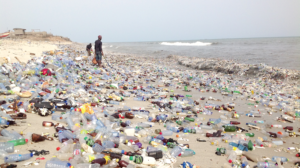
In Ghana, where the country generates an estimated 1.1 million tonnes of plastic waste annually (UNEP, 2023) and less than 5% is formally recycled, the stakes are not abstract. They show up in our gutters after rainfall, on our beaches, and in the fish markets of our coastal communities.
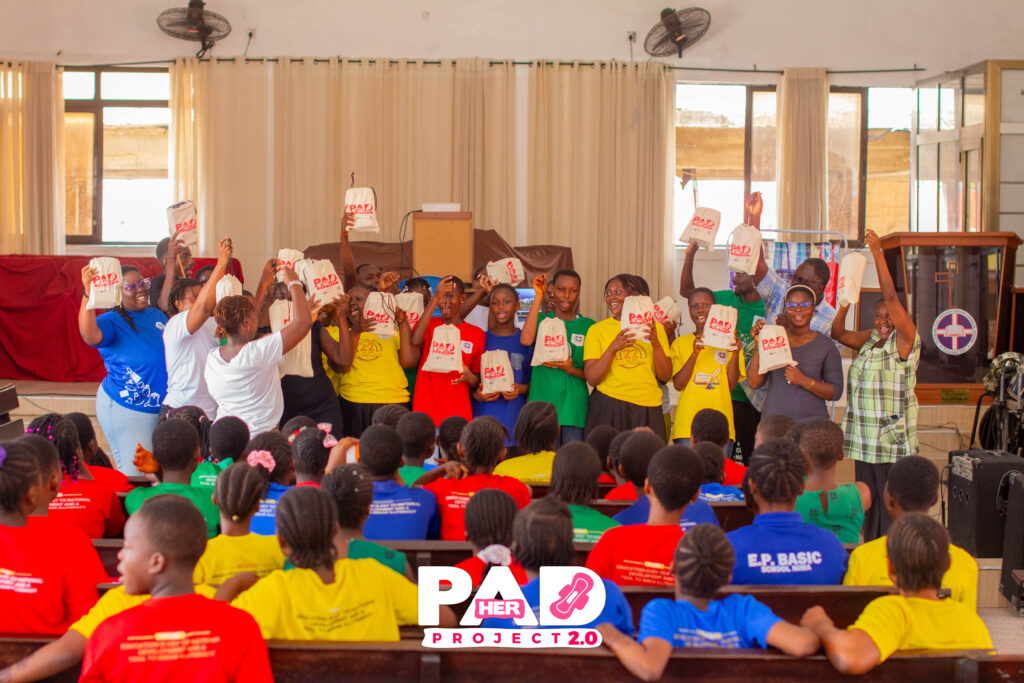
Recently, Reusable Bags GH partnered with a passionate menstrual health advocate working at the intersection of public health and environmental awareness. The collaboration centred on a simple but powerful idea: what if the packaging around period products could itself become part of the solution?
Instead of conventional plastic wraps, we provided custom-made reusable fabric pouches as eco-friendly alternatives for distributing menstrual health items. These pouches were designed to serve a dual purpose — carry essential healthcare products in the short term, and become a durable, everyday-use bag long after the initial contents are gone.
The initiative also opened a platform for honest conversations about menstrual hygiene management (MHM), a topic that remains stigmatised and under-resourced in many Ghanaian communities. According to WaterAid (2022), 52% of menstruating girls and women in sub-Saharan Africa face period poverty — meaning access to affordable, dignified period care is simultaneously a health issue, a gender equity issue, and an environmental one.
Consider the typical lifecycle of a plastic-wrapped period product: manufactured from fossil fuel-based materials, shipped in more plastic, unwrapped in seconds, then discarded — destined for a landfill where it persists for centuries.
Our fabric pouches disrupted that cycle entirely.
Research from the Ellen MacArthur Foundation estimates that a single reusable bag can replace an average of 700 single-use plastic bags over its lifetime. And according to a lifecycle assessment published in the International Journal of Life Cycle Assessment (2021), a reusable fabric bag needs to be used just 20 to 50 times to fully offset the environmental cost of its production compared to a single-use plastic bag. Our pouches are built to last years.
Recipients of this initiative walked away with something more than a healthcare package. They walked away with a lived experience of sustainability as something personal, practical, and empowering — not a distant concept for someone else to worry about.
“Sustainability should be integrated into the essentials of daily life, not treated as an afterthought. When we make the sustainable option the accessible option, behaviour change follows naturally.”
This partnership was also an opportunity to share the larger vision driving everything we do at Reusable Bags GH.
Our vision: By 2030, every person in Ghana — regardless of income, location, or background — should have reliable access to a high-quality, affordable alternative to single-use plastic bags and packaging.
The year 2030 is not arbitrary. It is the milestone year for the United Nations’ Sustainable Development Goal 12 (Responsible Consumption and Production) and SDG 14 (Life Below Water), both of which target significant reductions in global plastic pollution. It aligns with the African Union’s Agenda 2063, which frames this decade as a window for transformative environmental and economic change across the continent.
Ghana has already taken a legislative step in the right direction: the country introduced a Plastic Packaging Levy and related regulations in 2021, targeting single-use plastics. But policy alone does not change behaviour. Affordable, desirable, accessible alternatives must exist at scale for the transition to succeed. That gap is exactly where Reusable Bags GH operates.
Our 2030 milestones include:
Sceptics sometimes ask: does one reusable pouch really make a difference?
The answer, when you look at the numbers, is yes — especially when multiplied across a community. If just 1,000 people in Accra each replace 3 plastic bags per week with a reusable alternative, that is 156,000 fewer plastic bags entering the waste stream every year from one city alone.
When environmentalism is connected with healthcare, education, and community advocacy — as this partnership did — the message travels further. People don’t just receive a product; they receive a reason. And reasons stick.
This is the circular economy in practice: one product, multiple uses, extended lifetime, reduced waste, and a community that understands why it matters.
We are deeply grateful to our partner in menstrual health advocacy, and to everyone who has championed these reusable alternatives. Partnerships like this one prove that the road to a plastic-free future is not a solitary one. It is built through collaboration across sectors — health, education, environment, business, and community.
Every pouch in someone’s hand is one less piece of plastic in our landfills, our gutters, and our ocean.
The countdown to 2030 is on. We are four years away from a deadline the world cannot afford to miss. At Reusable Bags GH, we intend to meet it — one reusable fabric alternative, one community partnership, and one shifted mindset at a time.
Want to partner with us? Whether you’re an NGO, a business, a government institution, or a community advocate, we’d love to hear from you. Reach us at reusablebagsgh@gmail.com or find us on social media @ReusableBagsGH.
Sources: UNEP Ghana Plastics Report (2023) | WaterAid Period Poverty Report (2022) | Ellen MacArthur Foundation | International Journal of Life Cycle Assessment (2021) | UN SDG Framework
Connect with us on Instagram